How to Choose a Surfboard Leash: Size, Thickness & Style Guide
Choose the right surfboard leash with our size and thickness guide. Match leash length to your board and wave conditions. By Sticky Johnson NZ.
- 2 min read
- 3 chapters
- 4 FAQs
- Updated 18 Oct 2026

In this guide
Why You Need a Surfboard Leash
A leash keeps your board close after wipeouts so you can retrieve it quickly. It prevents your board from washing into rocks, reefs, or other surfers. It's essential safety gear, especially in larger or crowded surf, and is required at many breaks and by most surf schools.
How to Choose Leash Length
Match leash length to your board length — a 6'0" board needs a 6' leash. If between sizes, always round up (e.g. 6'3" board = 6'6" leash). Never go more than 1 foot longer than your board; excessive length creates tangles.Shortboards (5'6"–6'6"): 6ft leash. Funboards/fish (6'6"–7'6"): 7ft. Mini-mals (7'6"–8'6"): 8ft. Longboards (9'0"+): 9–10ft, with a calf cuff.
Leash Thickness Guide
Comp/thin (5–6mm): Minimal drag for small to medium waves and competition. Lower breaking strength.Regular (7mm): The all-rounder. Strong enough for most conditions up to overhead surf.Big wave (8mm+): Maximum strength for large, powerful surf. More drag but won't snap under extreme force.Leash Styles and FeaturesAnkle leash: Standard for shortboards. Attaches above the ankle bone on your back foot.Calf leash: Attaches below the knee, reducing drag. Popular with longboarders who cross-step.Swivels: Double swivel systems reduce tangles. Always choose a leash with at least double swivels.Rail saver: The padded section that wraps around the tail, distributing pull force and protecting the rail.Leash Care and ReplacementRinse with fresh water after every session. Store out of direct sunlight — UV degrades urethane over time. Check for nicks, fraying, or discolouration regularly. Replace at least once a year, or immediately if damaged. A snapped leash in heavy surf is a serious safety risk.

Frequently asked questions
Should my leash go on my front foot or back foot?
Can I use a shortboard leash on a longboard?
How do I attach a leash to my board?
Do I need a different leash for different boards?
Gear for this guide

6 FT Comp Leash
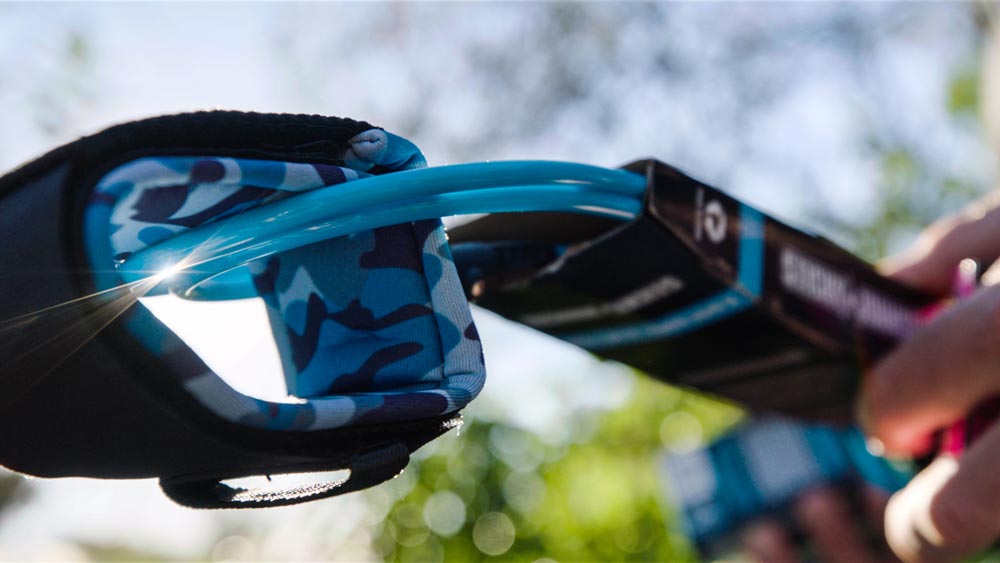
Take performance, strength, and style into the lineup with the Sticky Johnson 6 FT Competition Leash, available in Camo Blue and Camo Black. Built for serious riders, this leash blends premium components with a rugged design to keep you locked in and worry‑free in a full range of surf conditions.

6 FT Pro Comp Leash
Our new ‘Pro’ leashes are our most premium leash to date. They are made with super lightweight water resistant cuffs and our specifically engineered super flex ‘Serpent’ horn moulds ensuring maximum strength and comfort.
Marine grade Velcro and stainless steel double swivels provide ultra-grip and freedom so you can focus on surfing and forget you’re even wearing a leash!

6 FT Pro Leash
Built for everyday performance and lasting reliability, the Sticky Johnson 6'0 Leash combines premium German urethane strength with a lightweight, low-drag design. The thin, comfortable cuff stays secure without restricting movement, while marine-grade components and double stainless steel swivels ensure dependable performance in all conditions. Designed to stay out of your way and keep you connected when it matters most.

6 FT Regular Leash
Grip the wave, not your leash. The Sticky Johnson 6 FT Regular Leash is the daily driver of surfboard leashes. It delivers dependable performance for everyday surf sessions, without overkill.

7 FT Leash
Built for everyday performance and lasting reliability, the Sticky Johnson 7'0 Leash combines premium German urethane strength with a lightweight, low-drag design. The thin, comfortable cuff stays secure without restricting movement, while marine-grade components and double stainless steel swivels ensure dependable performance in all conditions. Designed to stay out of your way and keep you connected when it matters most.