How to wax a surfboard
From bare deck to go surf: basecoat, top coat for your water, where to wax every board, and keeping it grippy all summer. Made in Kumeu, for Kiwi water.
- 17 min read
- 9 chapters
- 15 FAQs
- Updated 18 Oct 2026

In this guide
Good wax is the difference between nailing the pop-up and eating it. Here's the full Sticky Johnson wax-up: basecoat vs top coat, the crosshatch, picking your grade for the water, where to wax on every kind of board, and how to keep it grippy right through a Kiwi summer. Made in Kumeu, for Kiwi water.
The short version
Primo. Board's ready, go get some.
Tap a step
Basecoat vs top coat: why you need both
A wet surfboard deck is about as grippy as a buttered bench. Wax gives your feet something to bite into, so you stay planted when you paddle, pop up and lean into a turn. A proper wax job is two layers that do two different jobs.
Basecoat builds the bumps
A harder wax that lays down small, firm bumps. It doesn't do much gripping on its own: it gives the top coat something to hold onto, so the top coat lasts longer and doesn't slide around.
- Same basecoat in any water temperature
- For hard boards: fibreglass and epoxy
- Ours: Deluxe Basecoat
Top coat is the grip
A softer, tackier wax that goes over the basecoat. It's what your feet actually stick to, and it comes in grades matched to the water: Cold, Cool, Warm and Tropical.
- Change grade when the water changes
- Every Sticky Johnson top coat goes over Deluxe Basecoat
- Ours: Deluxe, MEGA Johnson 2.0 and Soft Johnson Foamie Wax
Riding a foamie? Soft-tops don't need a basecoat. Go straight to Soft Johnson Foamie Wax on the textured deck.
Strip the old wax and clean the deck
Fresh wax on dirty wax is a clean T-shirt over a wetsuit you've worn all week. Start from a clean deck.
New board? Wipe off any dust or factory residue with a soft cloth and let it dry. That's it, crack on.
Used board?
- Soften it. Leave the board deck-up in the sun for a few minutes so the wax goes soft, not runny. Don't leave it baking: too much heat is bad news for a board.
- Scrape it. Use the flat edge of a wax comb at a low angle, in long strokes from nose to tail. Collect the scrapings and bin them, not the beach.
- Clear the film. Wipe the leftover residue off with Citrus Surf Wax Remover and a cloth.
- Check for dings. A bare deck is the best time to spot cracks and pressure dings. Get them fixed before you wax.
- Let it dry completely before any new wax goes on.
On a foamie, go gently: soften the wax with warm water and wipe it off with a cloth instead of scraping hard, or you can damage the foam. The full walk-through is in our guide to removing surf wax.
Lay the basecoat: crosshatch or circles?
Basecoat is where the bumps come from, so take your time. Work in the shade on a cool, dry deck. If it's a scorcher, pop the wax in the fridge for ten minutes first so it doesn't smear.
Crosshatch: our pick
Rub diagonal strokes one way across the deck, then the opposite diagonal, so you build a grid of X's. Firm, even pressure, using the edge of the bar. It builds even bumps fast and gives the top coat a solid grid to grip.
Small circles
Plenty of surfers rub in small circles instead. It works too, it just takes longer to get the bumps even. Whichever you pick, stick with it for the whole wax-up rather than mixing the two.
How much basecoat?
More than you think. Keep going until small, solid bumps cover the whole area where your feet and chest go, with no big bare patches between them. A longboard or a SUP takes a lot more than a shortboard, so grab a spare bar. You're done when the bumps feel firm and slightly rough under your palm.
Basecoat goes on whenever you start from a clean deck: on a new board, and after every full strip. Between strips, you only top up the top coat. Grab Deluxe Basecoat.
Pick your top coat by water temperature
Match the top coat to the water temperature, not the air. Warmer water needs a firmer wax so it doesn't go soft and smeary; colder water needs a softer wax so it stays tacky. Get it wrong and it either melts into a slick or sits there hard as a rock.
| Grade | Water | Hard boards | Foamies |
|---|---|---|---|
| Cold | Below 15°C below 59°F |
Deluxe Cold, MEGA 2.0 Cold | Foamie Cool/Cold |
| Cool | 15–20°C 59–68°F |
Deluxe Cool, MEGA 2.0 Cool, Deluxe Black | Foamie Cool/Cold |
| Warm | 20–24°C 68–75°F |
Deluxe Warm, MEGA 2.0 Warm | Foamie Warm/Tropical |
| Tropical | 24°C and up 75°F and up |
Deluxe Tropical, MEGA 2.0 Tropical | Foamie Warm/Tropical |
Foamie wax comes in two grades: Cool/Cold for water below 20°C (68°F) and Warm/Tropical for 19–25°C (66–77°F), the range printed on the box.
Deluxe or MEGA Johnson 2.0?
Both go over Deluxe Basecoat, and both come in all four grades. Deluxe beads up really well for long-lasting grip. MEGA is our most tacky wax, and MEGA 2.0 is the super tacky version. Pick the line you like the feel of, then the grade that matches your water. Riding a black board? Deluxe Black is a Cool grade made to blend in.

What about New Zealand?
Our surf wax temperature chart has month-by-month water temperatures for breaks from Ahipara to St Clair. The short story: Cool covers most of the North Island for most of the year, the northern breaks warm into Warm territory around January to April, and further south you'll want Cold through winter.
Putting the top coat on
Rub the top coat over the basecoat with lighter pressure, in the same crosshatch (or small circles, if that's your thing). Press too hard and you'll flatten the bumps you just built. Keep going until the bumps are covered and tacky to the touch.
Where to wax on every board
Wax goes where your body touches the board: your feet when you stand, your chest when you paddle. Never wax the bottom, and go easy on the rails.
Shortboard
Basecoat and top coat from your chest (where you lie to paddle) back to the front of the tail pad. Run it slightly onto the rails where your hands grab for duck dives, but go easy.
Most shortboarders put a tail pad on the back-foot zone and wax everything in front of it. No pad? Wax back to just in front of the leash plug.
- Basecoat + top coat
- Tail pad
Longboard, nose included
You walk a longboard, so wax the whole deck from tail to nose. Don't skip the nose: hanging five or ten is where you need grip most. Give the front section an extra coat of top coat and comb it more often.
Longboarders usually go without a tail pad. More deck means more wax, so keep a spare bar of top coat in your bag.
- Basecoat + top coat, whole deck
- Extra top coat on the nose
Fish and twin fins
Like a shortboard, but take the wax a bit further forward to match the wider, flatter outline. You'll probably stand a little further forward too.
On the tail, some riders wax right back and some run a flatter pad made for wide tails, like our Twin Fin Grip. Check a pad doesn't hang over the rails before you stick it.
- Basecoat + top coat
- Optional tail pad
Foamie and softboard
No basecoat. Rub Soft Johnson Foamie Wax straight onto the textured deck in light crosshatch strokes, from your back foot up past your front foot to your chest, until you've got an even, tacky layer.
Before each surf, rub on a thin fresh layer to bring the grip back. Skip the tail pad: pad adhesive is made for hard fibreglass and epoxy, and won't hold well on foam.
- Foamie wax only
SUP
Most stand-up paddleboards come with a foam deck pad over the standing area, and that pad does the gripping. Don't wax over it.
Got a bare hard deck, or surfing your SUP and stepping off the pad? Treat the bare area like a longboard: basecoat first, then a top coat for your water, wherever your feet go.
- Deck pad, no wax
Pairing wax with a tail pad or front grip
Pad on the back foot, wax from the front of the pad forward. Two rules:
- Strip the tail before you stick a pad. Pad adhesive won't bond to wax. Scrape the tail back, clean it with wax remover, let it dry, then stick the pad. Our tail pad guide walks you through it.
- Don't wax over the pad. It doesn't need it, and you'll just clog the grooves.
Some surfers also run a front-foot grip, like the Offshore Front Foot Grip, and wax the chest area for paddling. Browse tail pads and grips.
Refresh it with a wax comb before every surf
After a few surfs the bumps flatten and the wax goes smooth and shiny. No need to start again. Rake it back to life:
- Drag the toothed edge of a wax comb across the wax in diagonal lines one way, then the other: a crosshatch, same as the wax-up.
- Rub on a thin fresh layer of top coat in the same grade.
- Give it a quick feel. Tacky and rough? Go surf.
Thirty seconds on the sand beats a session of slipping. Tie a comb to your board bag or keys through the string hole so it's always there.
Out the back: before your first wave, work your feet into the wax a few times. It helps you lock in for that first pop-up.
When to strip it and rewax
Combing and topping up keeps you going between wax jobs, but every so often it's time to strip it back and start fresh. Do it when:
- It's been about 2–3 months, if you surf a lot
- The wax has gone grey, brown or black with dirt, sand or wetsuit dye
- The bumps are flat and combing doesn't bring the grip back
- The water has changed enough to switch grades: strip it rather than layering a new grade over the old
- You're heading on a trip to warmer (or colder) water
- You've had a ding repaired and need a clean deck around it
Heat, storage and surf trips

At the beach and in the car
- Shade is your mate. A board left deck-up in full sun, or in a hot car, can melt any wax into a sloppy mess, and the soft grades go first. Heat isn't great for the board either.
- Bag it. A board bag (a reflective one is best) or a board sock keeps the sun off, and the sand and dog hair out of your wax.
- Deck down in the shade on the sand keeps the wax firm between surfs.
- Melted anyway? Let it cool, then comb it. If it's gone smeary and flat, strip it and rewax.
Storing your wax
- Keep spare bars somewhere cool and out of the sun: not the dashboard or the parcel shelf.
- Pop them in a container or zip-lock bag so they don't pick up sand or melt onto everything else in your bag.
- Keep a bar of each grade you use, plus basecoat, so you're covered when the season turns.
Surf trips
- Pack for the water you're going to. Check it on the temperature chart (it covers over 50 countries) and pack the right top coat.
- Strip before you go if you're changing grade, and lay fresh basecoat and the new top coat at home, where it's easy.
- Pack a kit: basecoat, top coat, a comb and some remover, sealed up in your board bag.
- Need a bag for the trip? The board bag size guide helps you pick, or browse board bags.
Ten waxing mistakes, and the fix for each
- Skipping the basecoatOn a hard board, top coat on its own slides around and wears off fast. Lay basecoat every time you start from a clean deck.
- Wrong grade for the waterToo soft melts into a slick; too hard won't grip. Match the top coat to the water, not the air.
- Pressing too hard with the top coatYou'll squash the bumps you just built. Light pressure, and let the basecoat do the shaping.
- Layering gradesCool over Cold over Warm grips unevenly. When the season changes, strip it and start again.
- Waxing in the blazing sunThe wax smears instead of beading. Work in the shade, and chill the bar first on a hot day.
- Waxing over sand and grimeDirt under the wax means less grip. Clean the deck first, and rinse sandy feet before you stand on it.
- Forgetting the combSmooth, shiny wax is slippery wax. Rake it before every surf.
- Waxing the bottom or loading the railsWax on the bottom adds drag. A little on the rails for your hands is fine; a lot is not.
- Sticking a pad over waxThe adhesive won't bond. Strip and clean the tail before a tail pad goes on.
- Scraping a foamie hardYou can tear the foam. Use warm water and a cloth to clear old wax off a softboard.
Surf wax FAQ
How do you wax a surfboard, step by step?
Start with a clean, dry deck. Rub on Deluxe Basecoat in a crosshatch (diagonal strokes one way, then the other) until firm bumps cover where your feet and chest go. Then layer a top coat matched to the water temperature over the top with lighter pressure until the bumps feel tacky. Before each surf, rough it up with a wax comb and add a thin fresh coat.
Do I really need a basecoat?
On a hard (fibreglass or epoxy) board, yes. Basecoat is a harder wax that builds the bumps your top coat grips onto. Without it, top coat slides around and wears off quickly. Foamies are the exception: soft-tops don't need basecoat, so go straight to Soft Johnson Foamie Wax.
Should I wax in a crosshatch or in circles?
Both work. We recommend a crosshatch for the basecoat because it builds even bumps quickly. Small circles take a bit longer to get even. Whichever you choose, keep the top coat pressure light so you don't flatten the bumps.
How much wax do I need?
Enough basecoat to cover the whole standing and paddling area in small, firm bumps with no big bare patches, then enough top coat to cover those bumps and make them tacky. A longboard or SUP takes a lot more than a shortboard, so keep a spare bar of each in your bag.
What temperature wax should I use in New Zealand?
Go by the water temperature: Cold below 15°C, Cool 15–20°C, Warm 20–24°C and Tropical 24°C and up. Cool covers most North Island breaks for most of the year, the northern breaks reach Warm water around January to April, and further south you'll want Cold through winter. Check your spot and month on our surf wax temperature chart.
What's the difference between Deluxe and MEGA Johnson 2.0?
Deluxe beads up really well for long-lasting grip. MEGA is our most tacky wax, and MEGA 2.0 is the super tacky version. Both go on over Deluxe Basecoat, so pick the line you like and the grade that matches your water temperature.
How often should I rewax my surfboard?
Comb your wax and add a thin fresh coat before each session. Do a full strip and rewax every 2–3 months if you surf a lot, or sooner if the wax looks grey, flat or has lost its bumps, and whenever the water temperature changes enough to switch grades.
Can I put new wax over old wax, or mix grades?
Topping up the same grade over combed wax is exactly what you should do between surfs. Mixing grades is a different story: two grades on one deck grip unevenly. When the season changes, strip the old wax, lay fresh basecoat and start again with the new grade.
Where do I wax a longboard? Should I wax the nose?
Wax the whole deck, tail to nose, because you walk a longboard. Yes, wax the nose: if you're noseriding, that's where you need grip most, so give it an extra coat of top coat and comb it often.
How do I wax a foamie?
Skip the basecoat. Rub Soft Johnson Foamie Wax straight onto the dry deck in light crosshatch strokes, from your back foot to your chest, until you have an even, tacky layer. Use Cool/Cold for water below 20°C and Warm/Tropical for 19–25°C.
Do I need wax if I have a tail pad?
Yes, just not under the pad. The tail pad grips your back foot, and you wax from the front of the pad forward for your front foot and chest. Strip and clean the tail before sticking a pad on, because the adhesive won't bond to wax. See our tail pad guide.
Do I wax a SUP?
Usually not. Most stand-up paddleboards have a foam deck pad over the standing area that does the gripping, so don't wax over it. If your SUP has a bare hard deck, wax it like a longboard: basecoat, then a top coat for your water wherever your feet go.
Why isn't my wax sticky?
The usual suspects: the grade is too hard for the water (Warm wax in cold water won't soften enough), the bumps have flattened, the wax is dirty, or there's no basecoat underneath. Comb it and add a fresh coat first. If that doesn't fix it, strip it and rewax with the right grade from the temperature chart.
What happens if I leave my board in a hot car?
The wax can melt, and soft grades go first, leaving an uneven, messy deck. Park in the shade and keep the board in a board bag. If the wax does melt, let it cool, comb it, and strip and rewax if it's gone flat.
How do I get old wax off my board?
Soften it in the sun for a few minutes, scrape it off with the edge of a wax comb, then wipe the film away with Citrus Surf Wax Remover. On a foamie, use warm water and a cloth instead of scraping. The full steps are in our wax removal guide.
The wax-up kit

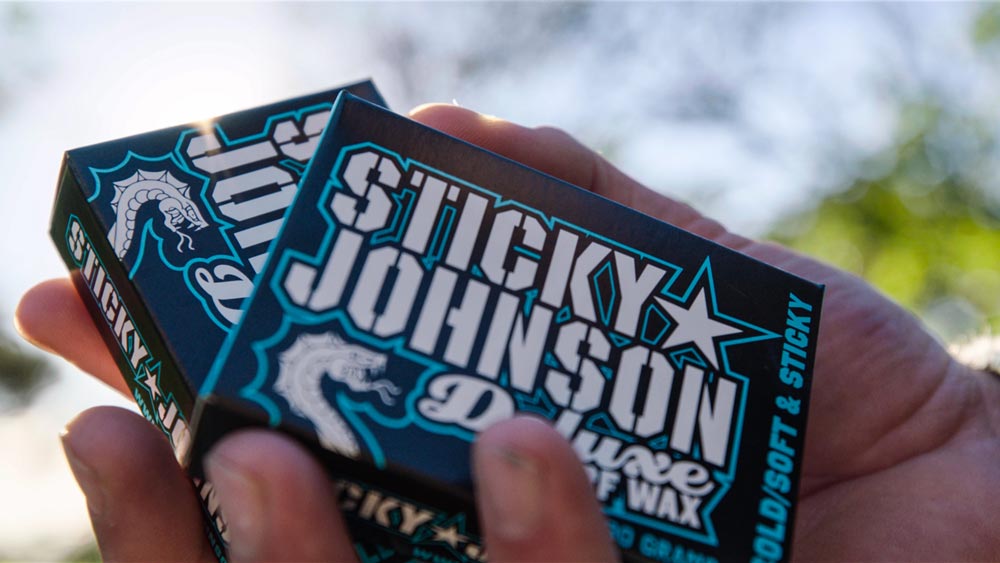
Sticky Johnson Deluxe Basecoat
Designed to create super tight, solid beads of surfboard wax, making the perfect basecoat to any Sticky Johnson top coat surfboard wax

Sticky Johnson Deluxe Surf Wax - Cool
Sticky Johnson Deluxe Cool surfboard wax is designed to be longlasting and super grippy wax that beads nicely upon application, keeping you stuck to your stick all session long.

MEGA Johnson 2.0 Surf Wax - Cool
MEGA Johnson Cool/Cold surfboard wax is designed to create super soft tacky surfboard wax, keeping you stuck to your stick all session long.

Wax Combs
The Sticky Johnson Wax Comb is a simple yet essential surf‑tool built for efficiency — its hard plastic construction and sharp‑toothed edge make it ideal for scraping off old wax, creating crisp rail contours or texturing your board in seconds. With a generous 117 mm × 60 mm sizing and a built‑in string‑hole, it’s easy to stash or tie to your kit and forget. Available in multiple vibrant colours (green, blue, yellow, orange, red) for easy identification and personal style

Citrus Surf Wax Remover
Natural citrus based solvent wax remover. Great for cleaning wax off boards and making them look like new!
Also useful for removing any type of adhesive, including deck grip adhesive! Spray on generously and allow the product to penetrate the adhesive for at least 1 minute. Then, remove it with a wax comb or paper towels.
120ml